Smart Lock & System Design
Locky
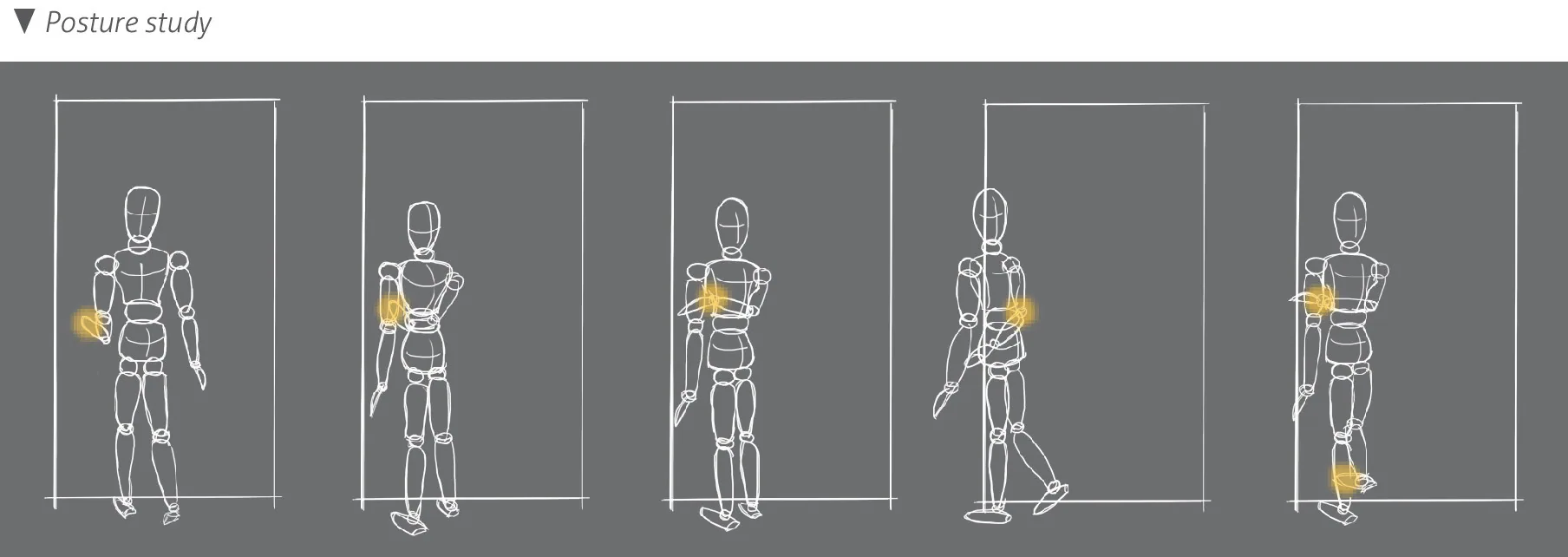
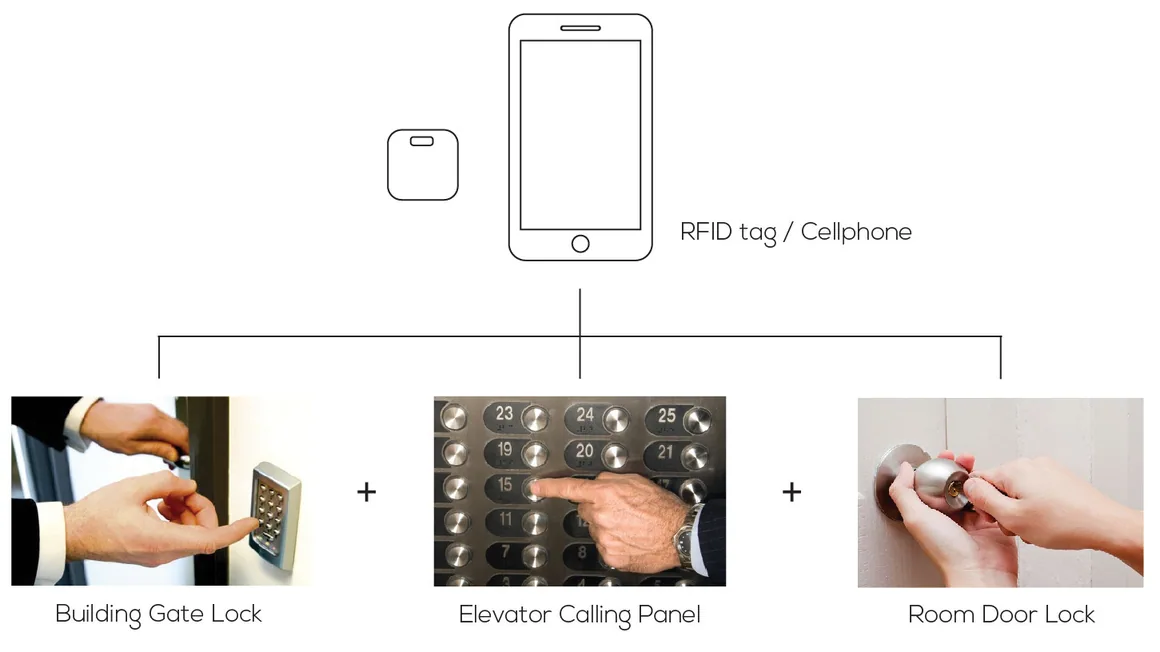
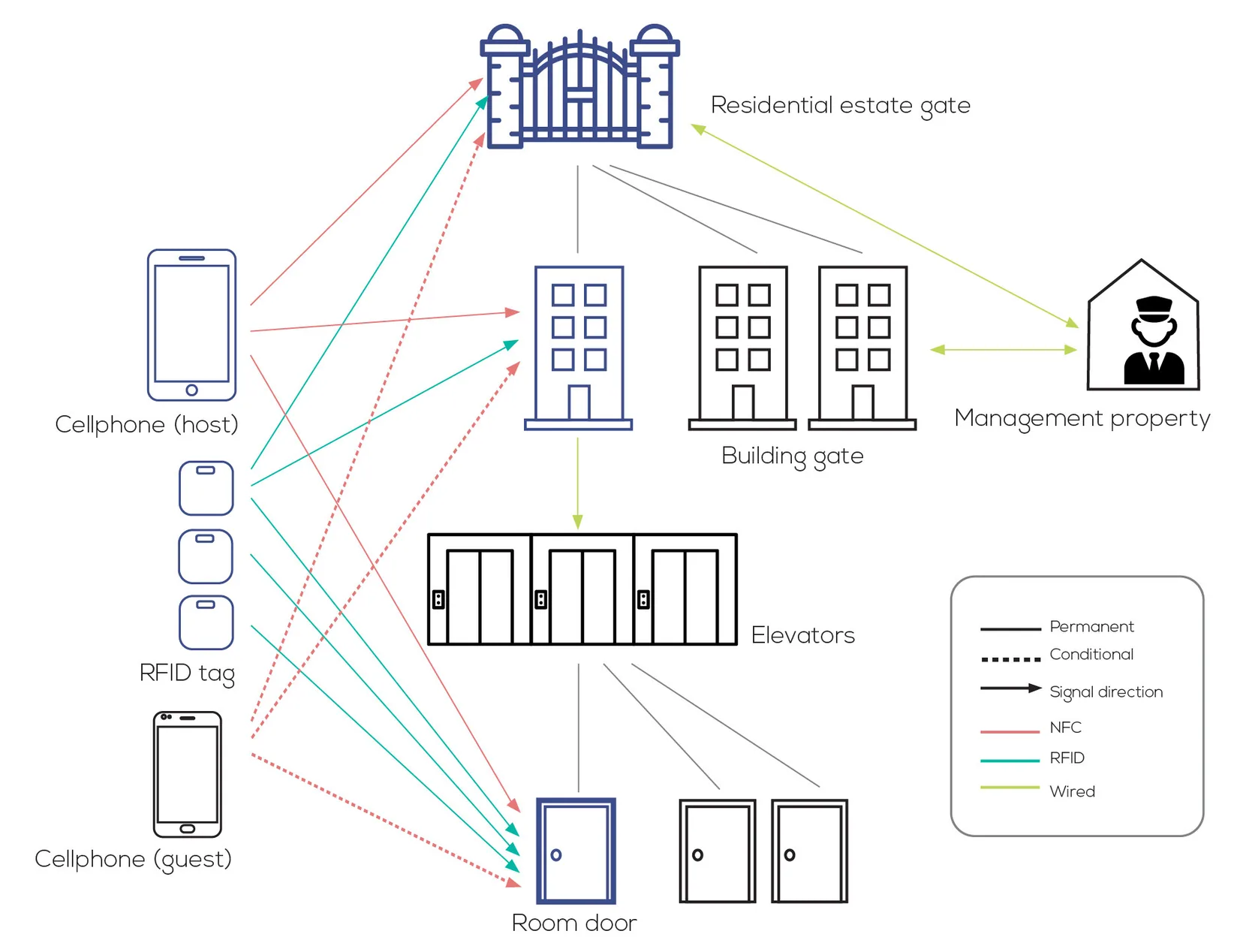
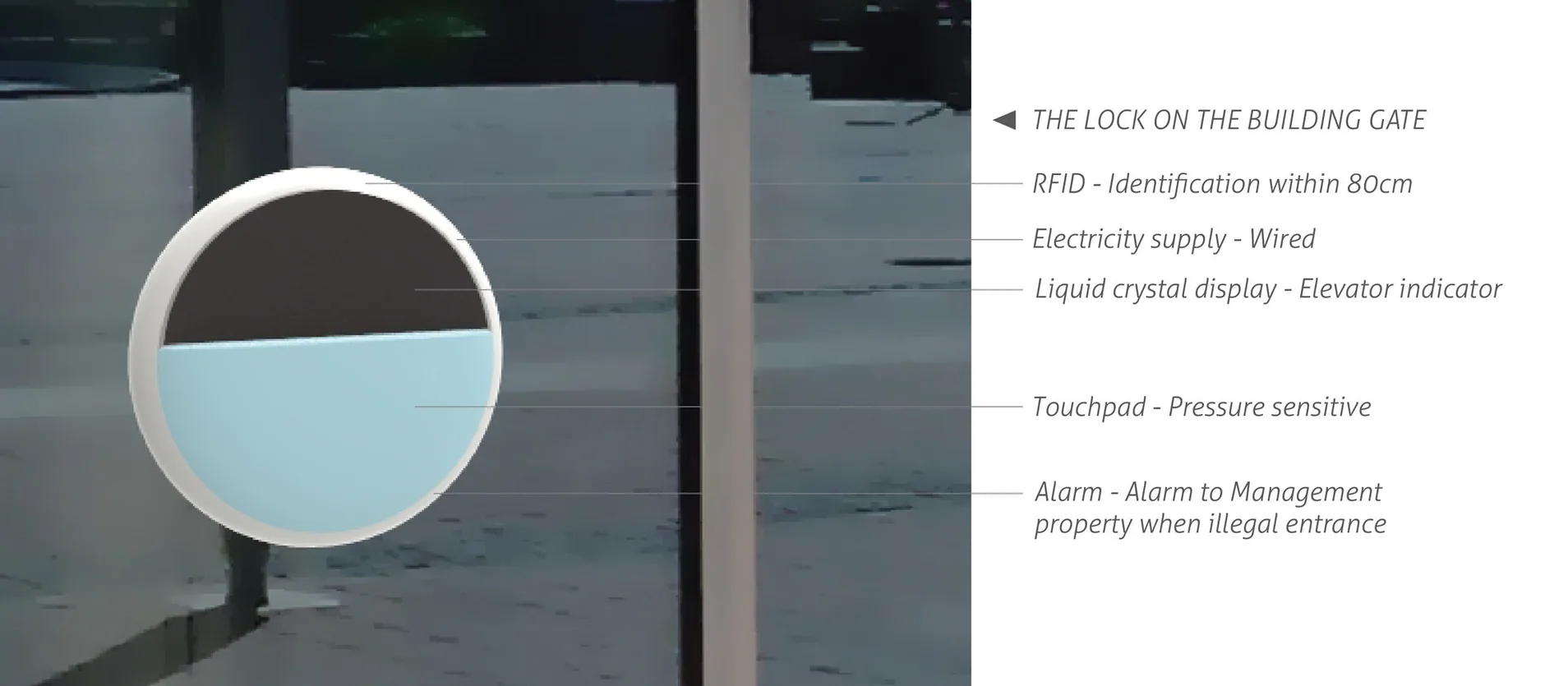
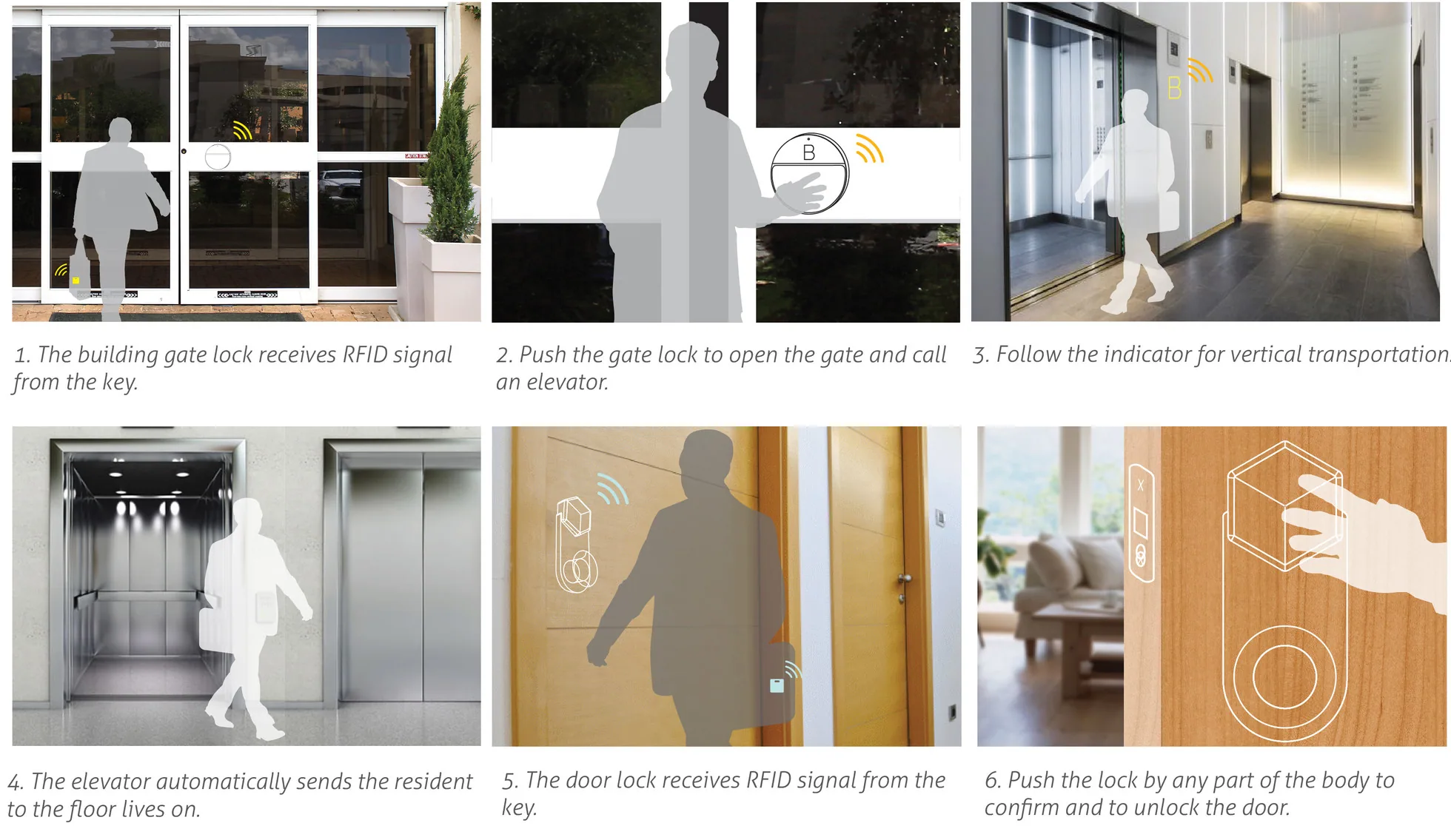
Usually, people traveling in apartment buildings often have their hands full. When they go back home from work or school, people feel relaxed and hope to enjoy the convenience on the way home. However, to maintain the safety level of the building, some facilities are used, which are integrated and always bring inconvenience to users. Plus, user diversity is rarely considered. The design aims to minimize the contradiction between convenience and safety. The new integrated system mainly consists of two devices: the lock on the building gate (also an elevator calling panel), and the lock on room door. With RFID key in the bag, a user can have a smooth commuting flow in the apartment building. At the same time, the security level is improved.
Role /
Product design
Team /
Individual Work
Year /
2016
User Study
People in an apartment building are usually divided into three types: residents, temporary users, and property management. For residents, they travel in the building from different activities. For non-residents, certain people are unwelcome. The design should bring great convenience to legal users but a great obstacle to illegal users.
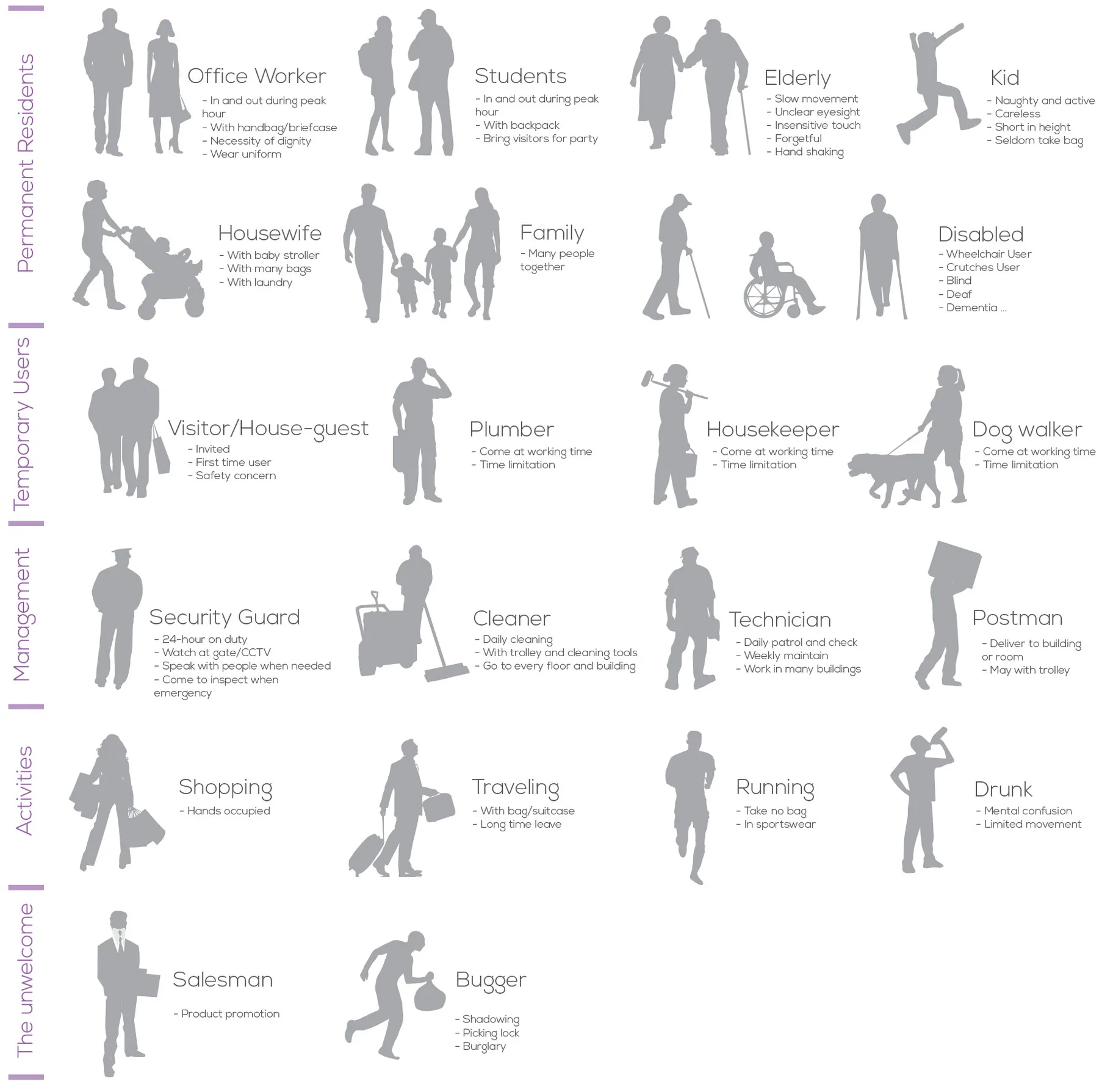
- Contradiction between convenience and safety concern
- Unintegrated facilities
- Lack of consideration for user diversity
Technology Research
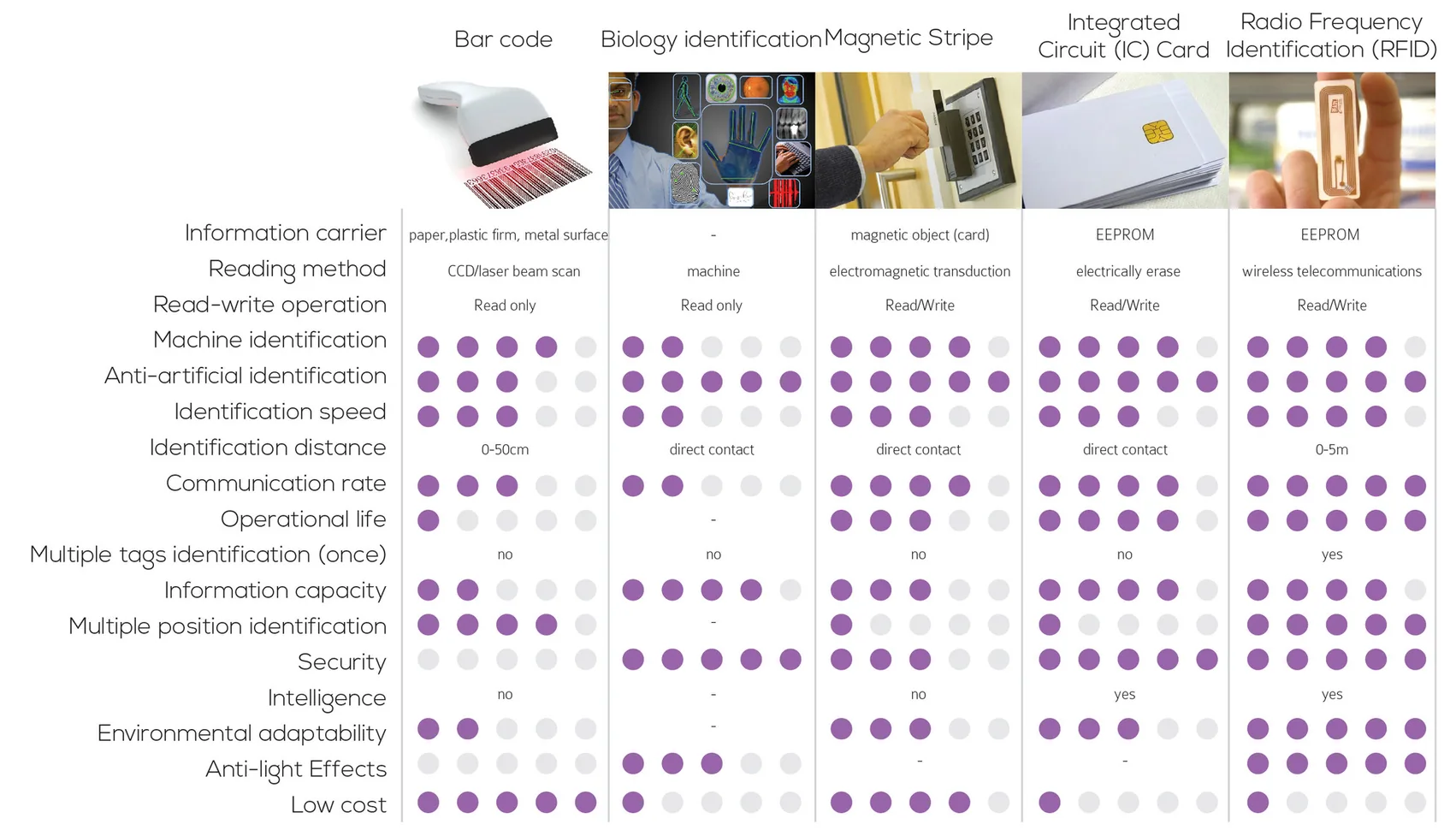
The five most common identification technologies, bar code, biology identification (fingerprint, DNA, voice, iris, face, retina, signature, hand outline), magnetic stripe, integrated circuit (IC) card, and radio frequency identification (RFID) are compared in the following form.
Design Concept
The new integrated system mainly consists of two devices: the lock on the building gate (also an elevator calling panel), and the lock on room door. With RFID key in the bag, a user can have a smooth commuting flow in the apartment building. At the same time, the security level is improved.
Final Design
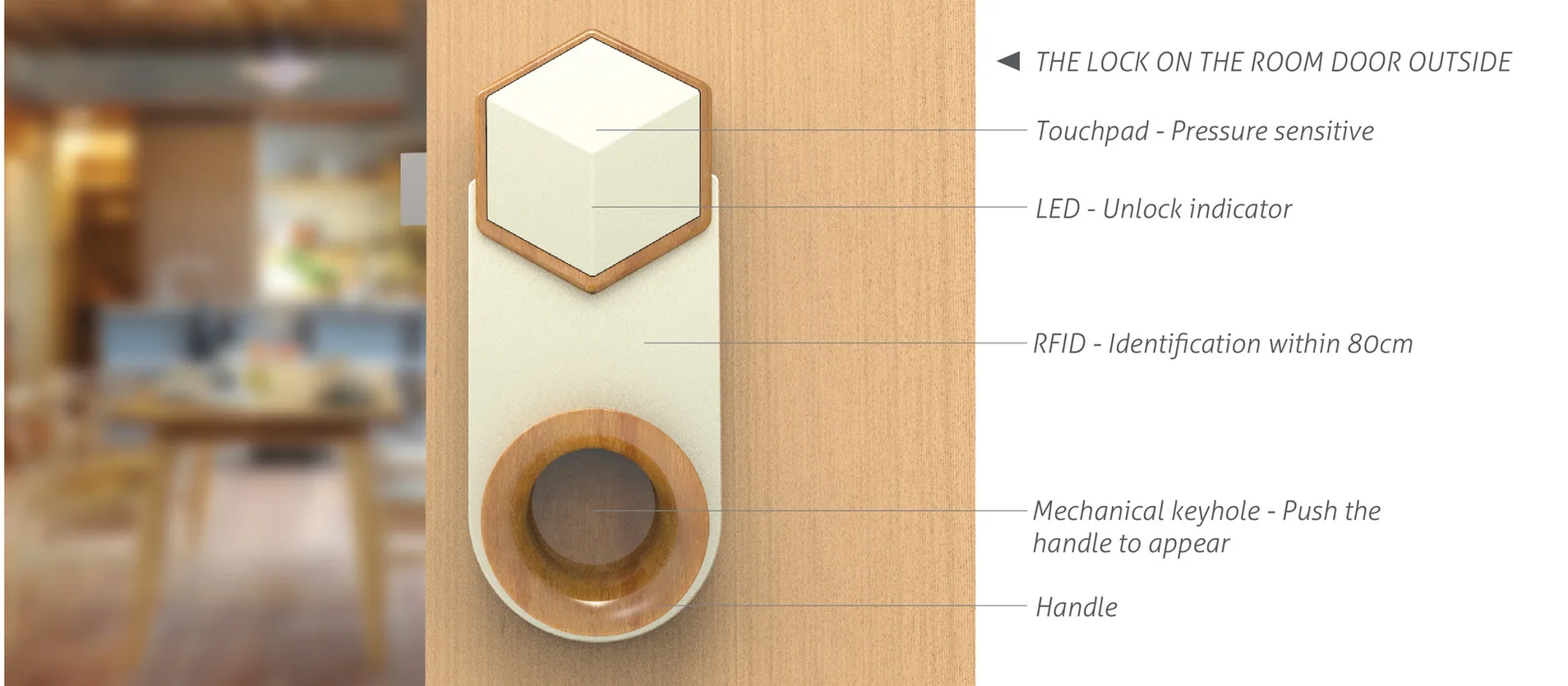
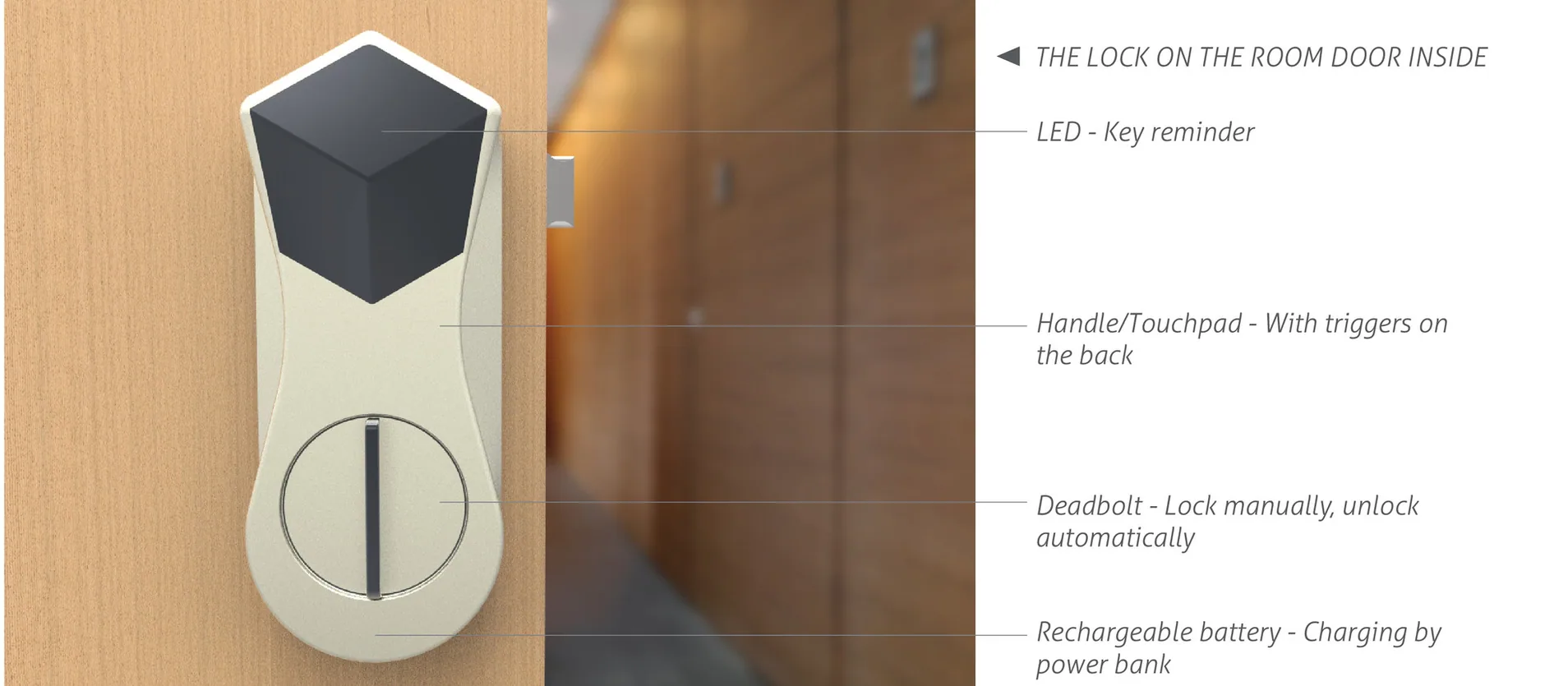
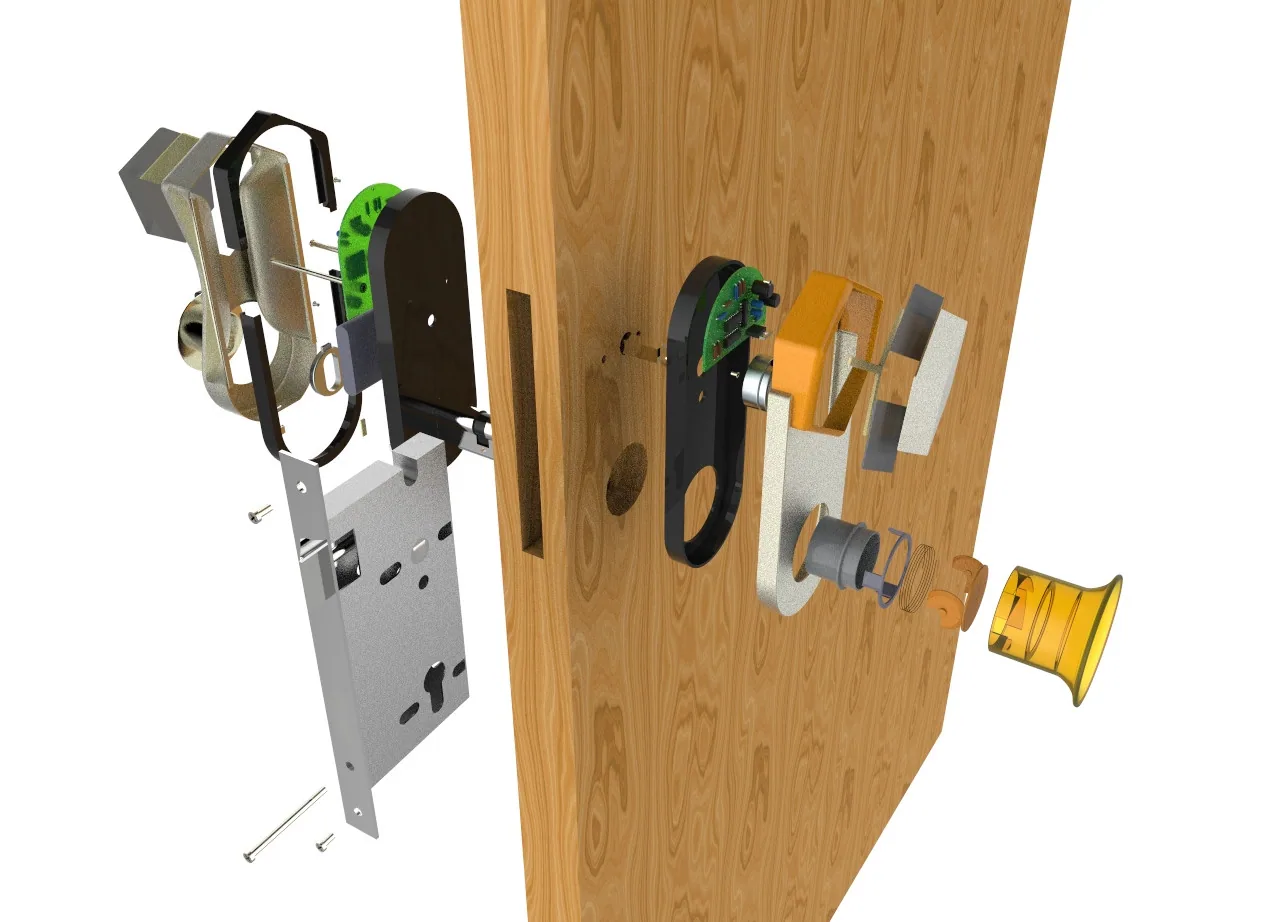
Component of Locky
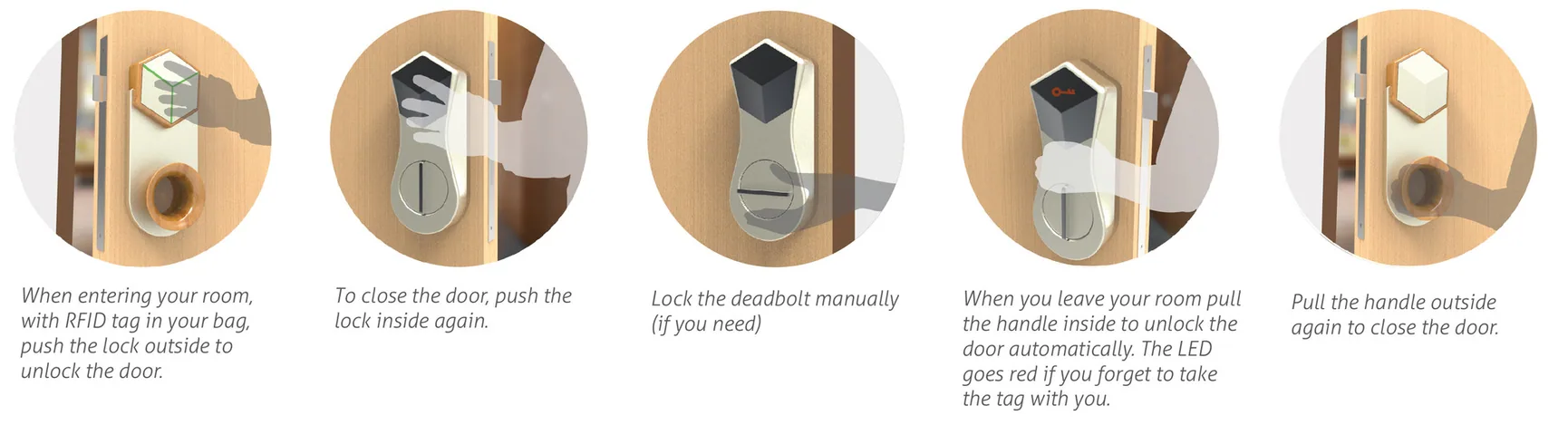
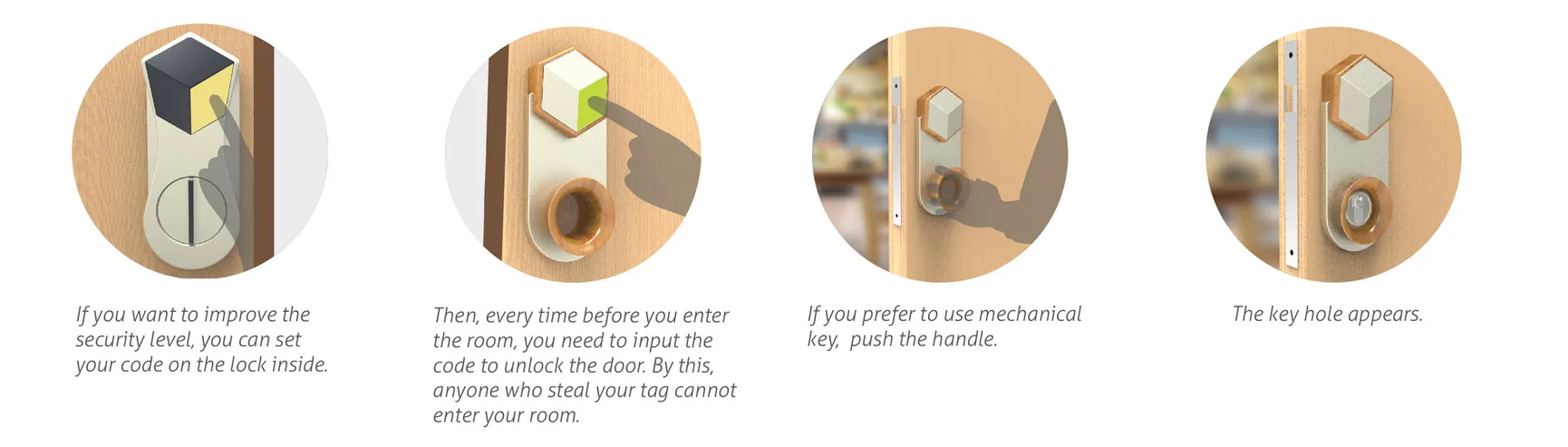
User Manual of the Whole System
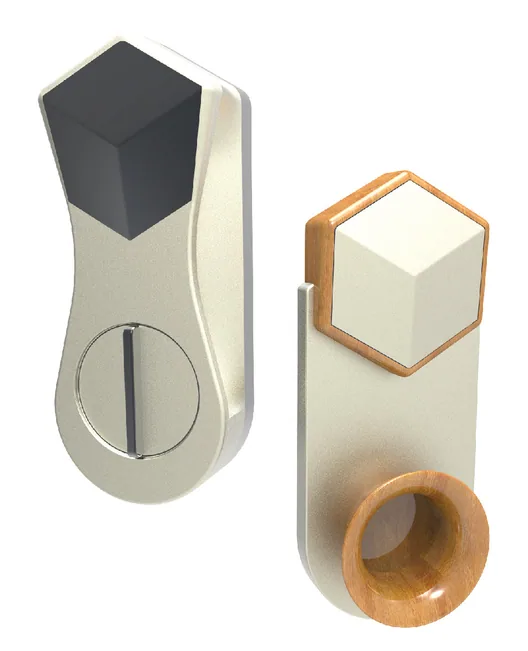
Structure of Locky
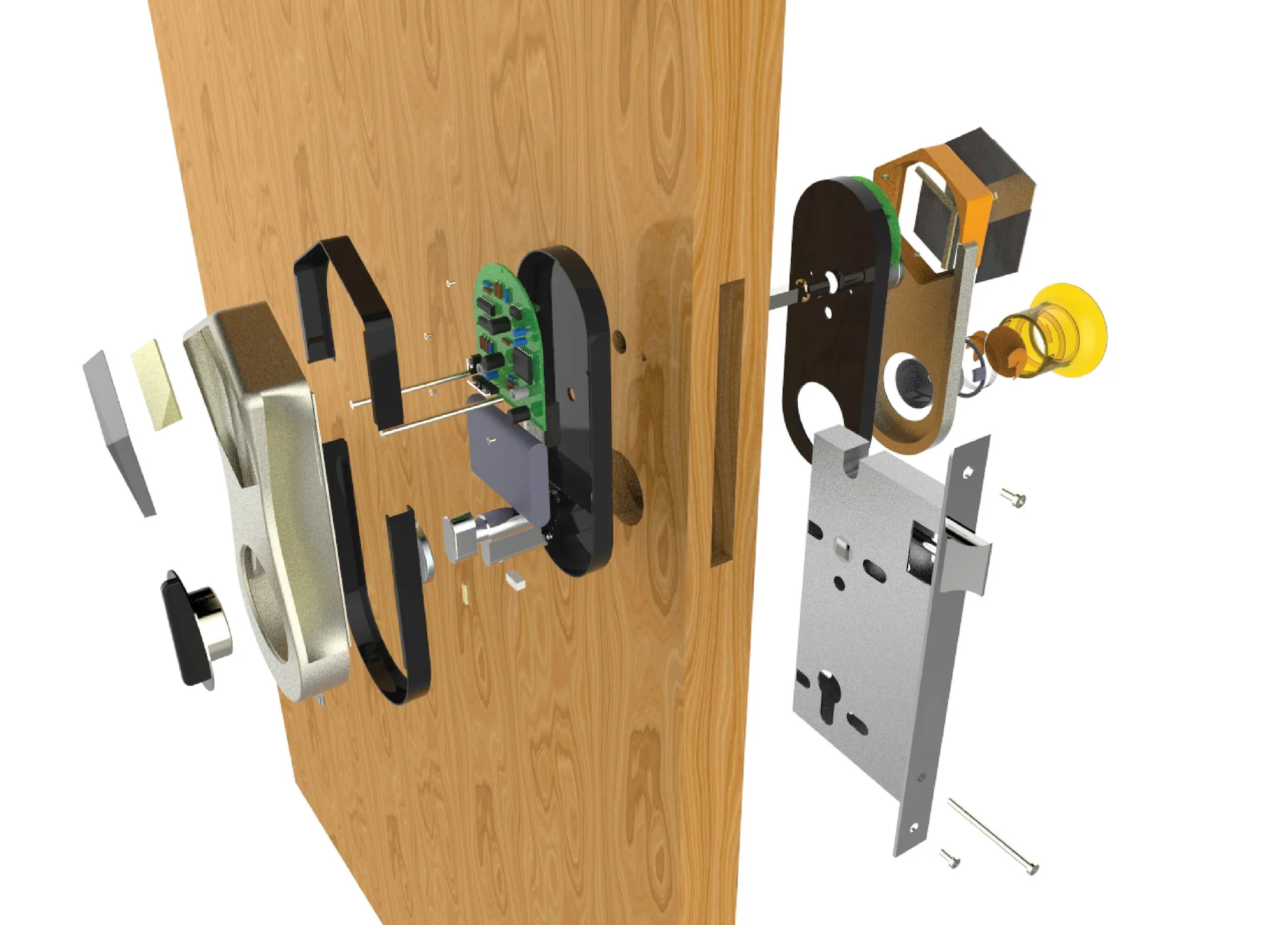
Easy to install on a traditional lock
User Manual
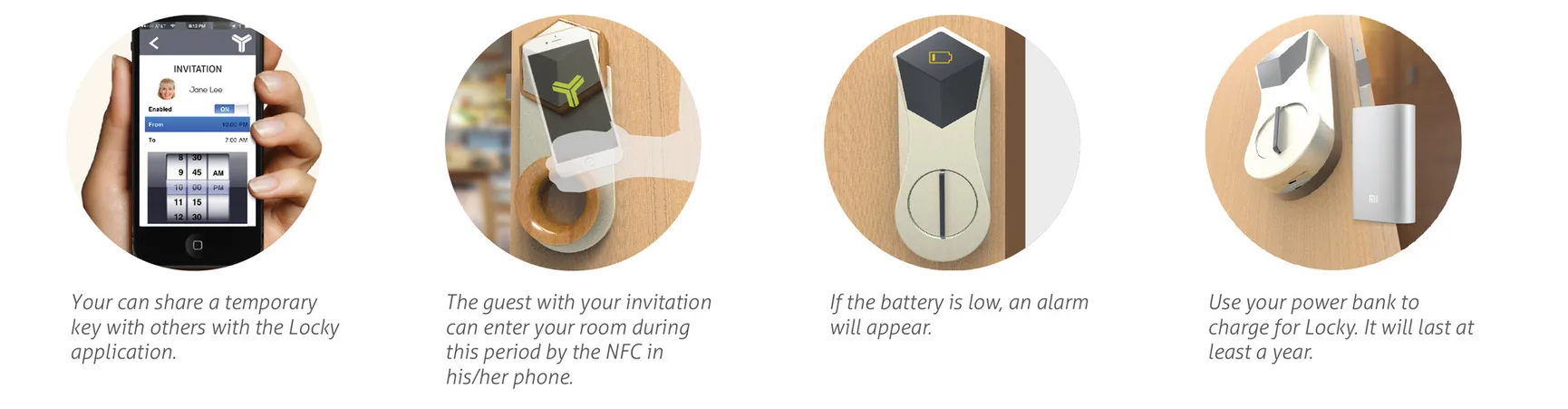
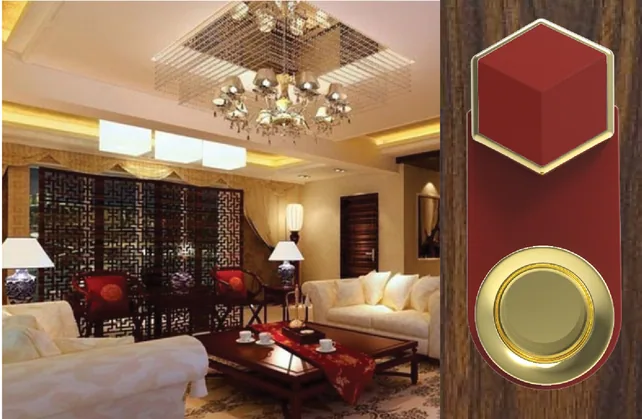
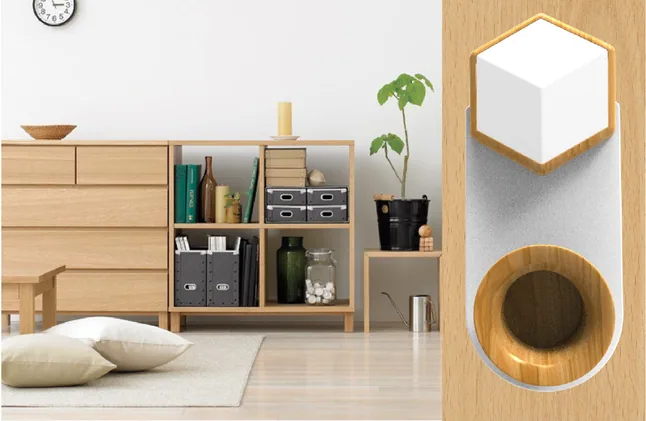
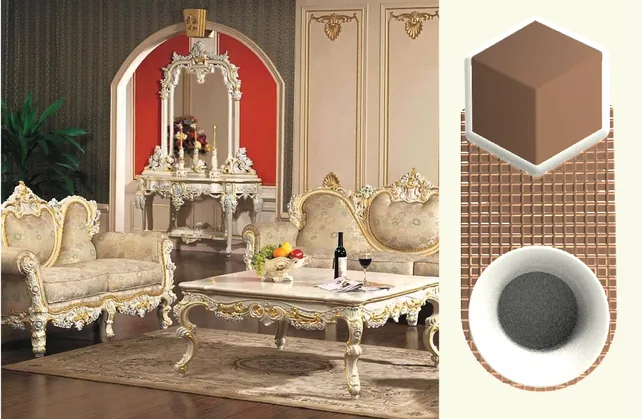
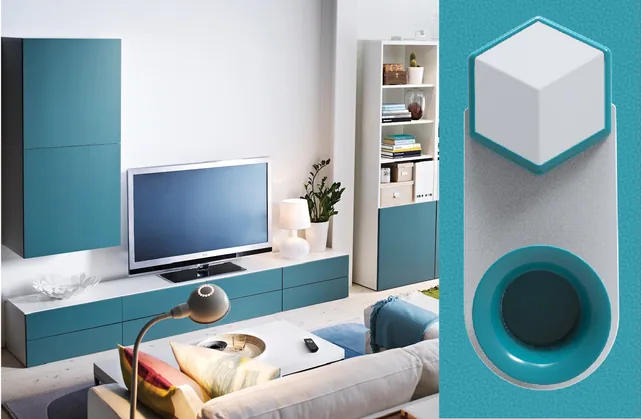
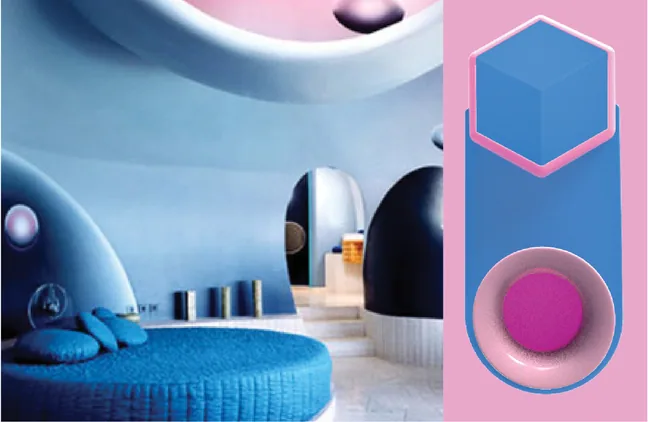
Material and Style
Publication
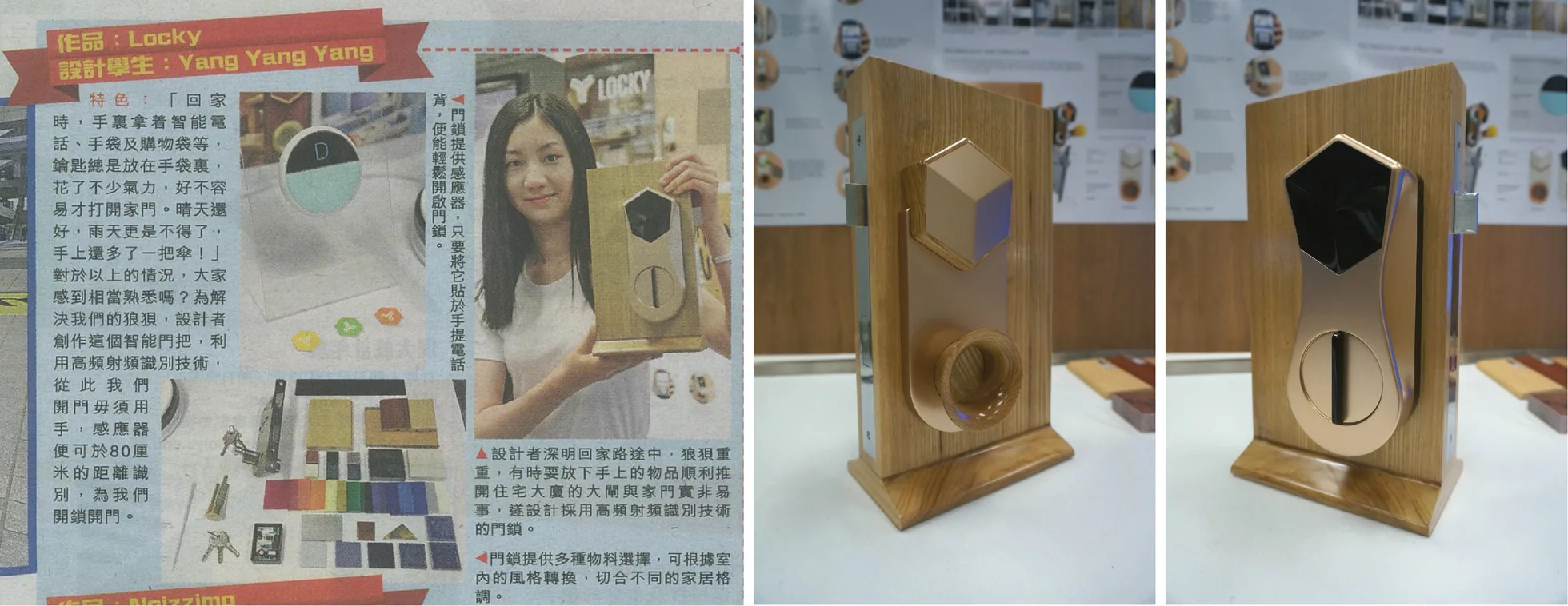
Publication on Hong Kong Economic Times (July 18th, 2016)